A creative idea does not arrive with a label telling us which medium it belongs to. Sometimes it wants to become an image. Sometimes a sound, a physical object, a website, or an experience. The challenge is to listen before deciding what form it should take.
The idea comes first
At Moease Design, the disciplines may change, but the underlying questions remain remarkably consistent: What are we trying to communicate? What should someone feel? How can form and function reinforce each other? What would make this unmistakably original?
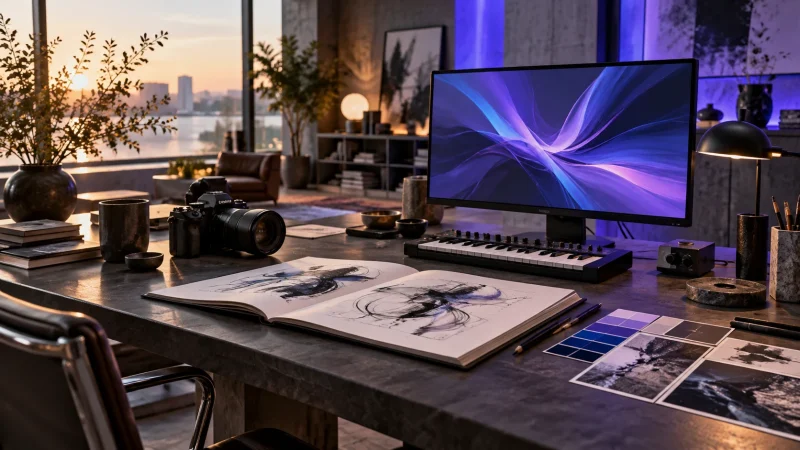
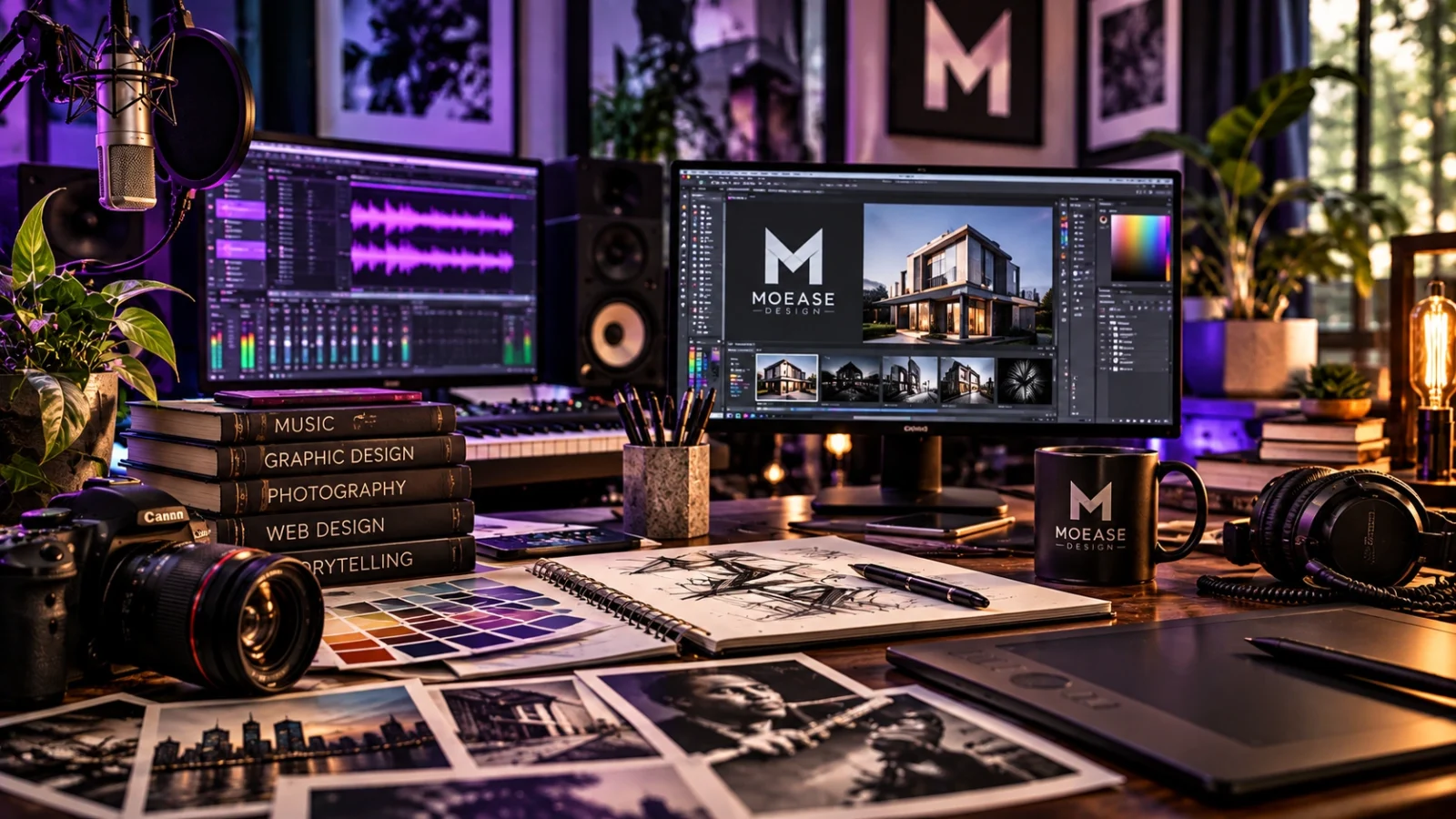
These questions apply whether the work begins with a sketchbook, a camera, a musical arrangement, a block of wood, or a digital interface. Each medium offers its own possibilities and constraints, but none has a monopoly on imagination.
What one discipline teaches another
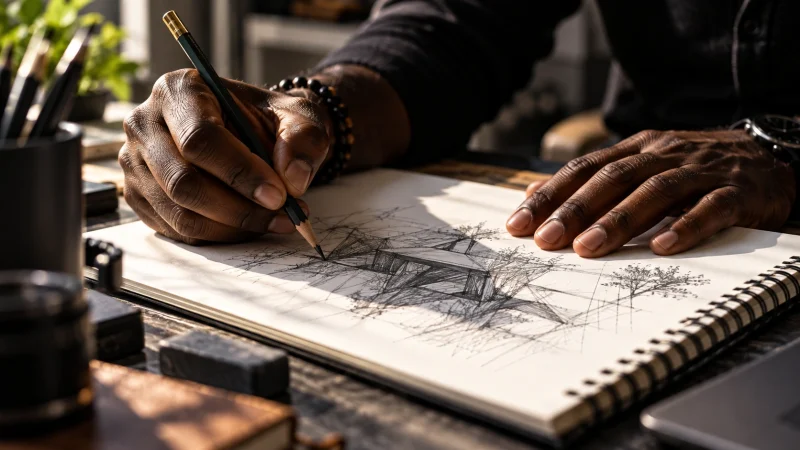
Drawing teaches observation. It asks us to notice proportion, movement, negative space and the relationships between elements. Even a rough sketch can reveal what a polished concept has overlooked.
Photography teaches framing. A photograph is not only about what is visible. It is about what we choose to include, what we leave out, and how light directs attention.
Music teaches rhythm. Timing, tension, silence and release shape emotional experience. Those same principles can influence an edit, an animation, the pacing of a website, or the order in which a story unfolds.
Woodworking teaches material honesty. Grain, weight, structure and finish demand respect for the physical world. A beautiful idea must also survive the realities of how something is made and used.
Digital design teaches interaction. The audience is not always a spectator. Sometimes people participate, navigate, respond and make choices. The design has to anticipate those moments with clarity.
Different tools, one creative vocabulary
John Moise’s experience across visual design, photography, music, woodworking and web development has reinforced a simple conviction: creative disciplines are not isolated islands. They are connected languages.
A sense of composition learned through drawing can improve photography. Musical structure can sharpen motion design. The precision required to make furniture can inspire cleaner digital layouts. And the storytelling instincts developed in one field can make the work in another more human.
This cross-pollination is not about doing everything at once. It is about allowing what we learn in one place to enrich what we create somewhere else.
Technology expands the canvas
New tools—including generative AI—make it possible to explore ideas, test variations and prototype experiences at speeds that once seemed impossible. But speed alone does not create meaning. The value still comes from the choices: which concept is worth pursuing, which details deserve attention, and what the final work should communicate.
Technology is most compelling when it extends human curiosity rather than replacing it. The tool can change; the need for imagination, discernment and craft remains.
Creative freedom requires discipline
Working across mediums does not mean ignoring expertise. Every craft deserves practice, patience and respect. The goal is not to become careless about boundaries; it is to avoid treating boundaries as limits on the imagination.
Sometimes the strongest solution comes from a single specialized approach. Other times it emerges because a designer hears a rhythm in a visual sequence, recognizes an architectural form in a piece of furniture, or finds a story inside a brand identity.
One creative vision, many forms
What connects the work is not a software application, a camera, or a particular material. It is a point of view: a belief that originality, emotion, beauty and usefulness belong in the same conversation.
At Moease Design, we don’t begin by asking which box an idea fits into. We begin by asking what the idea could become.